Service desk
Run a shared ticket inbox with queues, assignment and priorities.
Use controlled ticket lifecycles, replies, notes and customer context to keep resolution accountable.
Continue the relationship after the sale
Handle requests, share progress and deliver work without forcing customers or staff into disconnected systems.
What you can do
Run a shared ticket inbox with queues, assignment and priorities.
Use controlled ticket lifecycles, replies, notes and customer context to keep resolution accountable.
Track response and resolution targets across the service workflow.
Make breaches and deadlines visible while retaining the history behind a ticket.
Create searchable team knowledge with draft and published states.
Use owners, review dates, verification evidence and controlled customer visibility.
Help teams respond consistently and resolve recurring cases.
Reuse governed snippets and guided checklists without hiding the agent's final decision.
Turn customer work into structured delivery.
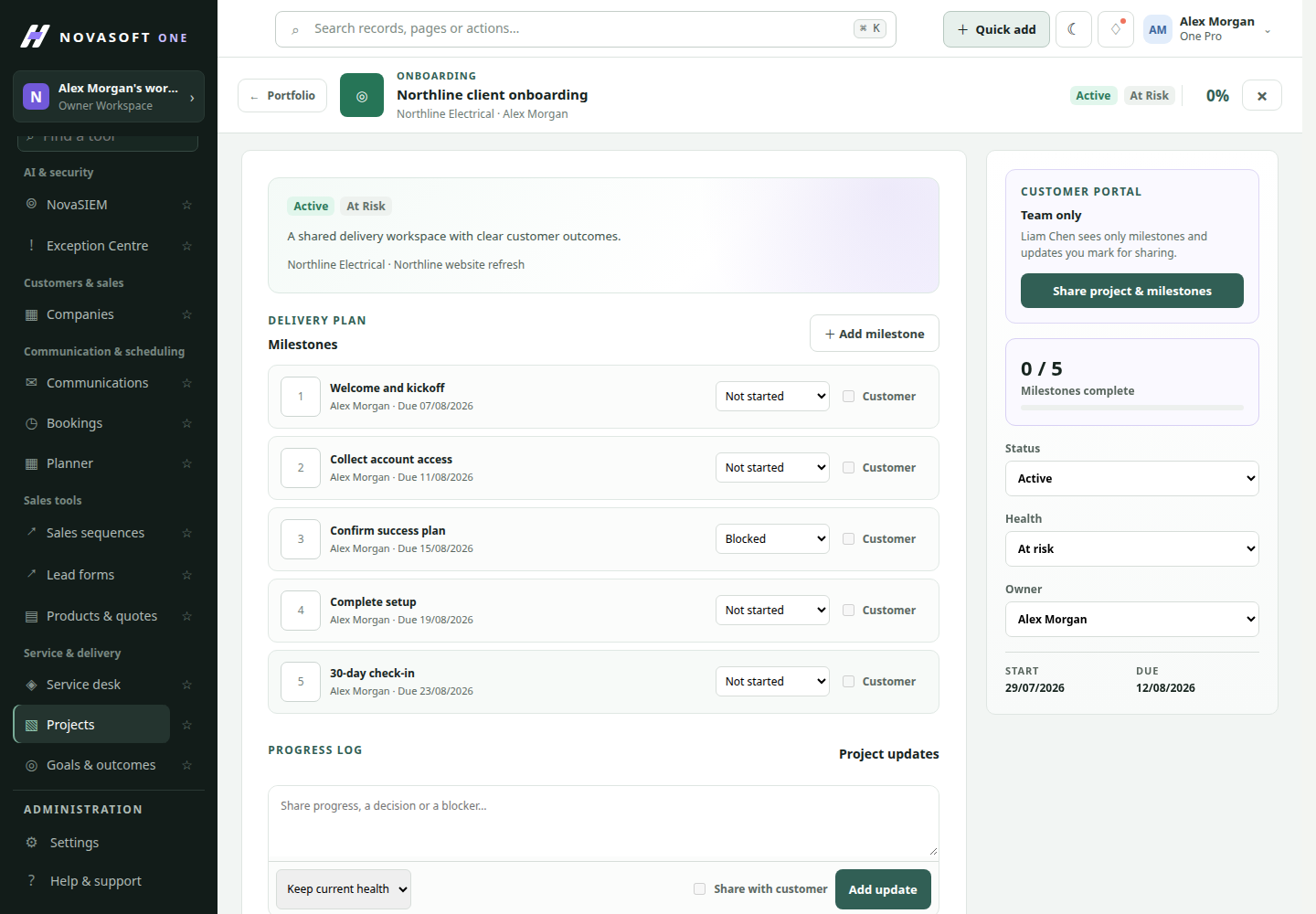
Track ownership, health, due dates, templates, milestones, time and budget where enabled.
Link portfolios and initiatives to measurable outcomes.
Connect projects and risks to weekly evidence so progress has an accountable basis.
Give invited customers a separate, contact-scoped place to follow shared work.
Customers can view deliberately shared service, documents and project progress, and review quotes where access allows.
No. Portal identity is separate from staff identity, and records are disclosed only within the customer's approved contact scope and sharing controls.
Yes. Draft, team and customer visibility are governed separately.
Keep exploring
Get started
Start with the core CRM for free, then add the tools your team needs.